Are Africa’s Traditional Foods Being Undervalued? Why Africans Should Invest in Their Own Harvest
One question deserves serious attention: Who Benefits When Africans Abandon Their Traditional Foods?
Walk into many African supermarkets today and you will notice a growing trend.
Imported food is often seen as more modern.
Factory-made drinks are promoted as more prestigious.
Packaged products are marketed as healthier than traditional foods.
But should Africans accept this idea without asking questions?
At African Reality, we believe every claim deserves careful examination. Our goal is not to reject modern science or foreign products. It is to encourage Africans to value their own resources, traditions, and innovations with confidence.
The Cassava Debate Is a Good Example
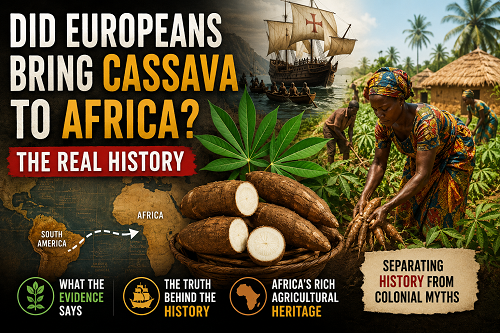
In our previous article, Did Europeans Bring Cassava to Africa? The Real History, we examined one of the most debated questions about Africa’s most widely consumed crop.
The evidence shows that while cassava was likely introduced from South America through Portuguese trade routes in the sixteenth century, Africa already had thriving agricultural systems long before then.
African farmers were not waiting for Europe to feed them.
They cultivated yam, millet, sorghum, fonio, African rice, oil palm, sesame, cowpeas, okra, and many other crops that supported powerful kingdoms and large populations.
Most importantly, African communities transformed cassava into foods such as garri, fufu, lafun, and abacha, making it part of African culture and identity.
When Tradition Is Constantly Questioned
Recently, social media has been filled with videos making dramatic claims about cassava.
Some claim it damages the brain.
Others suggest it was introduced to weaken Africans.
Current scientific evidence does not support these claims.
Properly processed cassava has been eaten safely by millions of people across Africa, South America, and Asia for centuries.
This does not mean cassava is perfect. Like many crops, it must be processed correctly before consumption. Traditional African methods of soaking, fermenting, drying, and roasting remove naturally occurring compounds that can be harmful if left untreated.
The lesson is simple.
Question sensational claims, but also examine the evidence.
Are Africans Losing Confidence in Their Own Foods?
Perhaps the bigger question is not whether cassava is dangerous.
It is whether Africans are slowly being convinced that anything local is automatically inferior.
Consider Nigeria.
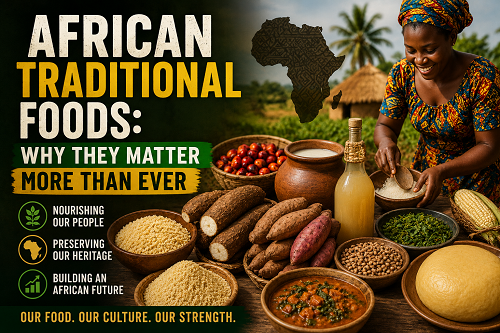
Traditional foods such as garri, yam, millet, palm oil, beans, local vegetables, fermented foods, and indigenous fruits have nourished generations.
Traditional beverages such as fresh palm wine and locally distilled ogogoro have long been part of many communities, although alcoholic drinks should always be consumed responsibly and within the law.
Yet many people now assume that a product becomes better simply because it is imported, factory packaged, or carries a foreign brand.
That assumption deserves to be challenged.
Local Does Not Mean Inferior
Across the world, countries protect and celebrate their own food traditions.
Italy promotes olive oil and pasta.
Japan proudly exports green tea and traditional cuisine.
France protects its cheese and wine.
Mexico celebrates maize.
Brazil values cassava and a wide range of native crops.
There is no reason Africa should not do the same.
Our foods are part of our identity, our economy, and our cultural heritage.
The Real Investment Africa Needs
Instead of abandoning traditional crops, Africans should invest in improving them.
Imagine a future where Nigerian businesses produce:
- Premium packaged garri for international markets.
- High-quality cassava flour.
- Modern palm oil processing.
- Certified palm wine products.
- Healthy snacks made from yam and millet.
- Export-quality fonio and African rice.
These industries can create jobs, strengthen rural communities, and reduce dependence on imported food.
The goal should not be to reject innovation.
The goal should be to add innovation to African resources.
Believe in African Ability
For too long, many Africans have been taught to admire what comes from outside while overlooking what exists at home.
History tells a different story.
Africa developed agriculture, trade networks, skilled craftsmanship, and thriving civilizations long before colonial rule.
The same creativity still exists today.
What Africa needs is greater confidence in its own farmers, entrepreneurs, researchers, and manufacturers.
The African Reality
Africa’s future will not be built by abandoning its natural resources.
It will be built by improving them.
When we invest in African farms, African food processing, African science, and African businesses, we create wealth that stays within our communities.
Let us question misinformation wherever it comes from.
Let us embrace science without losing our traditions.
And above all, let us believe that African products can compete with the very best in the world.
Read next on African Reality:
- Did Europeans Bring Cassava to Africa? The Real History
- The Benin Kingdom Before Colonisation
- The Real Life in Africa the Media Rarely Talks About
Africa’s greatest resource has never been imported.
It has always been the creativity, resilience, and determination of its people.